A Technical Dossier on HICLOVER Waste Incineration Systems: From Design Principles to Global Deployment
Modern waste incinerators represent a critical technology in the hierarchy of waste management, particularly for materials that cannot be recycled or safely landfilled. The engineering reliability of these systems is predicated on strict adherence to thermal destruction principles and international standards. An effective incinerator for clinical waste incineration, for instance, must achieve and maintain specific operational parameters, including combustion temperatures consistently between 850°C and 1200°C and a secondary chamber gas retention time of no less than two seconds. This ensures the complete breakdown of hazardous organic compounds and pathogens. Systems engineered by established manufacturers are designed to meet or exceed guidelines set by organizations such as the World Health Organization (WHO) and to align with stringent EU emission directives, providing a definitive solution for high-compliance waste streams.
Foundational Principles of High-Temperature Thermal Destruction
The efficacy of a waste incinerator is not measured by its capacity to simply burn waste, but by its ability to achieve complete, controlled combustion while minimizing harmful emissions. This process is governed by fundamental thermodynamic and chemical engineering principles, which are meticulously applied in the design of advanced thermal treatment systems. The core objective is the irreversible thermal decomposition of complex organic materials into simpler, stable inorganic compounds, primarily carbon dioxide, water vapor, and ash. Achieving this requires precise control over the conditions within the combustion chambers, a concept often summarized by the “Three Ts” of combustion: Temperature, Time, and Turbulence.
Modern systems, particularly those designed for hazardous materials like biomedical waste, are engineered to optimize these variables, ensuring a Destruction and Removal Efficiency (DRE) of 99.99% or higher for principal organic hazardous constituents. This level of performance is non-negotiable for regulatory compliance and environmental stewardship, forming the bedrock of responsible waste incineration technology.
Dual-Chamber Combustion Mechanics
The standard for effective and clean incineration, especially for complex waste streams, is the dual-chamber design. This architecture segregates the combustion process into two distinct, sequential stages, each optimized for a specific function.
The primary chamber operates at a lower temperature, typically between 600°C and 850°C, under sub-stoichiometric (oxygen-starved) conditions. This environment facilitates pyrolysis and gasification, where solid waste is thermally decomposed into a mixture of combustible gases, volatile compounds, and a solid residue (ash). The controlled introduction of air prevents rapid, uncontrolled burning, which would entrain particulate matter into the flue gas stream. This initial stage is crucial for volume reduction and for converting the solid waste into a gaseous fuel for the next stage.
The volatile gases produced in the primary chamber are then directed into the secondary chamber, or afterburner. Here, excess air is injected to ensure super-stoichiometric conditions, and temperatures are elevated to 1000°C-1200°C or higher. This high-temperature, oxygen-rich environment ensures the complete combustion of the volatile compounds, destroying dioxins, furans, and other pollutants. The engineering of HICLOVER systems, for example, focuses on maintaining these precise conditions through automated burner modulation and airflow control, which can be reviewed in detail at https://www.hiclover.com/. This two-stage process is fundamental to achieving low-emission performance.
Temperature, Residence Time, and Turbulence (The 3 Ts)
The “Three Ts” are interdependent parameters critical to achieving complete destruction of pollutants in the secondary chamber.
- Temperature: Sufficiently high temperatures are required to break the chemical bonds of complex organic pollutants. International standards, such as the EU’s Waste Incineration Directive (now part of the Industrial Emissions Directive), mandate a minimum temperature of 850°C for non-hazardous waste and 1100°C for hazardous waste with a high halogenated organic content. This thermal energy ensures that even the most stable compounds are fully oxidized.
- Time: The flue gases must be held at this elevated temperature for a sufficient duration, known as the residence or dwell time. A minimum of two seconds is the globally accepted standard. This ensures that all gas molecules have adequate time to complete the combustion reaction. The geometric design of the secondary chamber is engineered specifically to guarantee this minimum residence time before the gases exit to the flue gas treatment system.
- Turbulence: The gas stream must be thoroughly mixed with the combustion air to ensure that every particle of hydrocarbon comes into contact with oxygen molecules. This is achieved through the strategic placement of air injection nozzles and the use of baffles or specific chamber geometries that create a turbulent, swirling flow path. Without adequate turbulence, pockets of unburned gas can pass through the chamber, a phenomenon known as short-circuiting. An in-depth query on regulatory specifics can be initiated here: https://www.google.com/search?q=dual+chamber+incinerator+residence+time+standards+EU.
The synergistic effect of these three parameters is what defines a high-performance incinerator, distinguishing it from a simple combustion device.
System Architecture and Deployment Versatility
The selection of an appropriate incineration system extends beyond core combustion principles to include its physical architecture, control philosophy, and suitability for the intended operational environment. As global challenges evolve, from the need for decentralized waste management in remote regions to rapid response requirements for public health crises, the versatility of incinerator design has become paramount. Key differentiators in modern systems address these logistical and operational demands directly, influencing total cost of ownership, deployment speed, and long-term operational viability.
Factors such as site accessibility, availability of skilled labor, and the urgency of need heavily influence the choice between a permanent, site-built facility and a prefabricated, modular solution. This decision is a critical component of commercial investigation for government agencies and private enterprises alike, balancing initial capital expenditure against operational flexibility and speed of implementation.
Fixed vs. Containerized Modular Systems
Traditional waste incinerators are fixed installations, constructed on-site with significant civil engineering works. While suitable for large, centralized municipal or industrial facilities with predictable, long-term waste streams, they lack flexibility. The construction timeline can be extensive, and the asset is immovable.
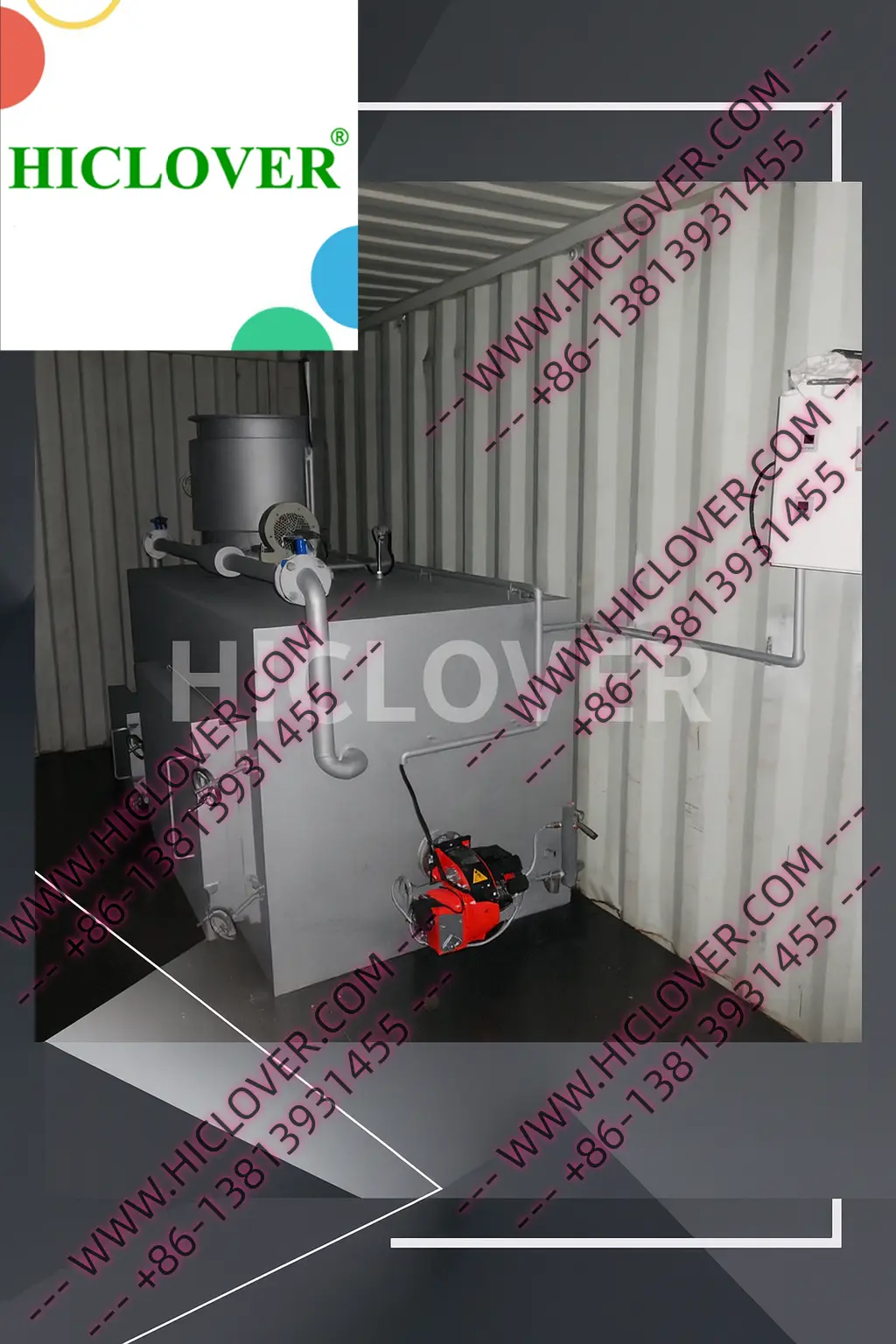
In contrast, containerized modular systems represent a significant advancement in deployment strategy. HICLOVER has pioneered the engineering of complete incineration systems, including the primary and secondary chambers, fuel tanks, control panels, and flue gas treatment, within standard ISO shipping container footprints. These units offer distinct advantages:
- Rapid Deployment: Being factory-assembled and pre-tested, containerized units can be transported via truck, ship, or rail and become operational within days of arrival on-site. This is critical for humanitarian camps, military forward operating bases, and emergency responses to disease outbreaks, reflecting a growing need for global infectious disease preparedness.
- Minimal Site Preparation: They require only a stable, level concrete pad and utility connections, drastically reducing civil works costs and environmental disruption.
- Scalability and Relocatability: Multiple units can be deployed to increase capacity, and the entire system can be relocated to a new site as operational needs change. This suits applications like remote mining or oil and gas camps with finite project lifecycles.
- Decentralized Waste Management: These systems enable effective waste management at the source, reducing the cost and risk associated with transporting hazardous materials like clinical waste over long distances.
Automation and Control Systems: PLC vs. Manual Operation
The control system is the brain of the incinerator, managing the complex interplay of temperature, airflow, and fuel injection. While basic, manually operated systems exist, they are highly dependent on operator skill and are prone to inefficiencies and inconsistent performance, which can lead to regulatory non-compliance.
Advanced systems utilize Programmable Logic Controllers (PLCs) for fully automated operation. A PLC-based system, as is standard on HICLOVER automatic incinerators, offers superior control and safety. The PLC continuously monitors sensors (thermocouples, pressure transducers, oxygen analyzers) and adjusts burner firing rates, damper positions, and fan speeds in real-time to maintain optimal combustion conditions. This digital automation provides several benefits:
- Consistency and Compliance: Automation ensures the “Three